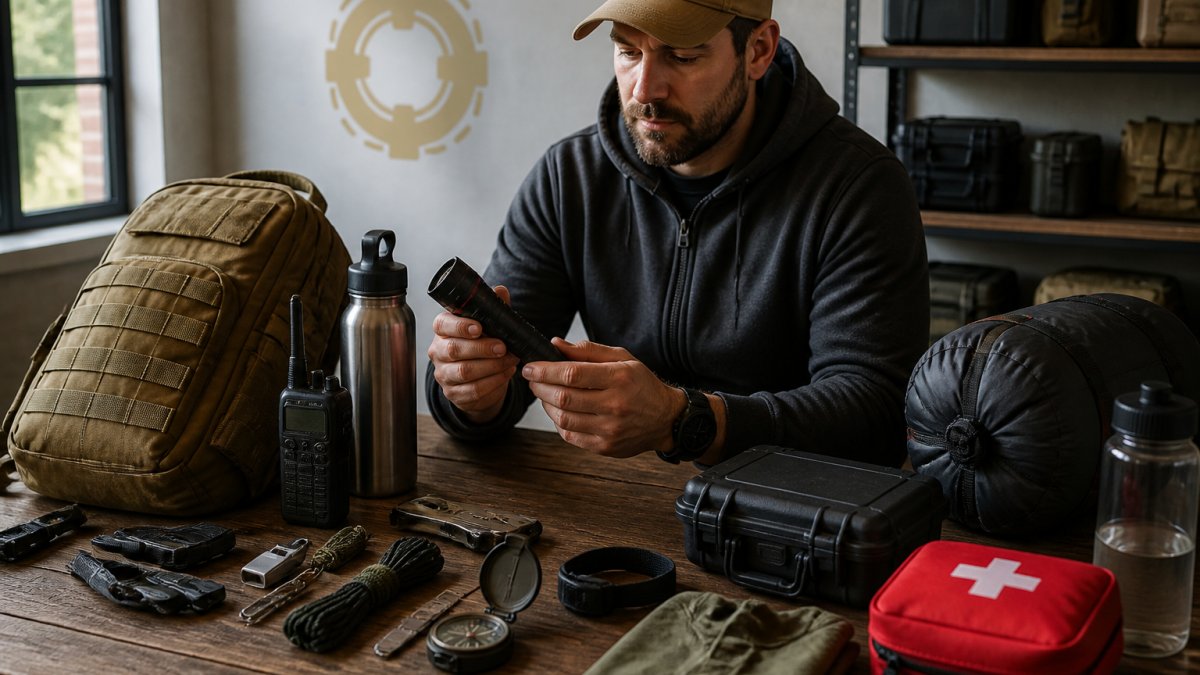
 how-to
Survival Gear Quality Check Standards 2026
Table of Contents
- Why Survival Gear Quality Check Standards Matter in 2026
- How to Test Survival Gear Before You Trust It
- Your Survival Gear Checklist for 2026 Quality Checks
- Solar Generator Testing Checklist for Emergency Power
- Survival Kit Maintenance Schedule: What to Check and When
- Recognized Testing Standards and Their Limits
- Counterfeit and Misleading Survival Gear Claims to Watch For
- Conclusion: Building a Reliable Quality Check Routine
- Frequently Asked Questions
Last Updated: October 5, 2026
Why Survival Gear Quality Check Standards Matter in 2026
Most survival gear fails when you need it most.
A survival gear quality check standard is a repeatable set of tests and inspections used to confirm that equipment will work as claimed in a real emergency.
More households now build emergency kits for storms, wildfires, and long power outages, yet many sit unopened for years. Untested, unmaintained gear is gear you cannot count on.
Below: how to test survival gear, a full survival gear checklist, a solar generator testing checklist, a survival kit maintenance schedule, and the testing standards that exist, plus their limits and the fake claims to avoid in 2026.
How to Test Survival Gear Before You Trust It
Most gear guides tell you to "check your gear." That is not a standard. A standard is a repeatable process with a defined pass/fail result, so two people inspecting the same item reach the same conclusion. Here is an objective method for any item.
The Pass/Fail Inspection Method
Run every item through four gates. If it fails any gate, it does not go in the kit until it is fixed or replaced.
- Visual gate: Inspect for cracks, rust, corrosion, fraying, discoloration, and deformation. Any visible structural defect is an automatic fail.
- Mechanical gate: Operate every moving part, zippers, buckles, valves, hinges, switches, seals. Anything that sticks, leaks, or fails to seat is a fail.
- Functional gate: Run the item through its actual job under load or in the field. It either performs or it does not.
- Documentation gate: Confirm expiration dates, warranty status, and any test reports. Missing or expired documentation is a fail for consumables.
Record the result and date. A written record turns a one-time check into a baseline you can compare against later.
Measurable Benchmarks to Check Against
Vague impressions fail. Use these benchmarks, and note the conditions each was measured under, a number without its test conditions means nothing.
- Water filter flow rate: Time how long one liter of clear water takes to pass. A sharp drop from rated flow, or a slow trickle on a new filter, signals a clog or low-quality unit. Re-test with turbid water to see how fast it fouls.
- Pack seam and strap strength: Load the pack to working weight and lift it by the haul loop and shoulder straps. Watch for seam separation, stitch pull, and buckle slippage, a seam that gives under load will fail in a real carry.
- Battery runtime: Charge fully, run a known load (phone, light, small fan), and time how long it holds. Compare against rated capacity, a large gap is a red flag.
Field-Testing Water Filters and Purification Systems
Water treatment is the one item you cannot fake. Run at least one liter through a new filter and time it, a slow trickle on day one means a clogged or low-quality filter.
For a straw, confirm steady pull with no air leaks; for pump filters, check every seal and O-ring; for chemical purification, verify the expiration date and that tablets or drops are sealed.
Testing Fire Starters, Shelter, and Navigation Tools
Fire, shelter, and navigation fail in quiet ways, and you only find out when conditions are worst. Test fire starters in wet or windy conditions: ferro rods should throw sparks on the first strike, lighters should work after sitting in a cold pack, and matches need a waterproof case that seals.
For shelter, set up your tent, tarp, or bivy in the yard, check every stake, pole, and seam, and spray it with a hose, a shelter that leaks in the yard will soak you in a storm.
Test your fire starter and water filter on the same trip you test your shelter. One overnight campout exposes weak gear in every category at once, costing a single weekend instead of several.
Your Survival Gear Checklist for 2026 Quality Checks
A survival gear checklist is a written list of every item in your kit and the checks each one needs, turning a vague "I think I'm ready" into a clear yes or no.
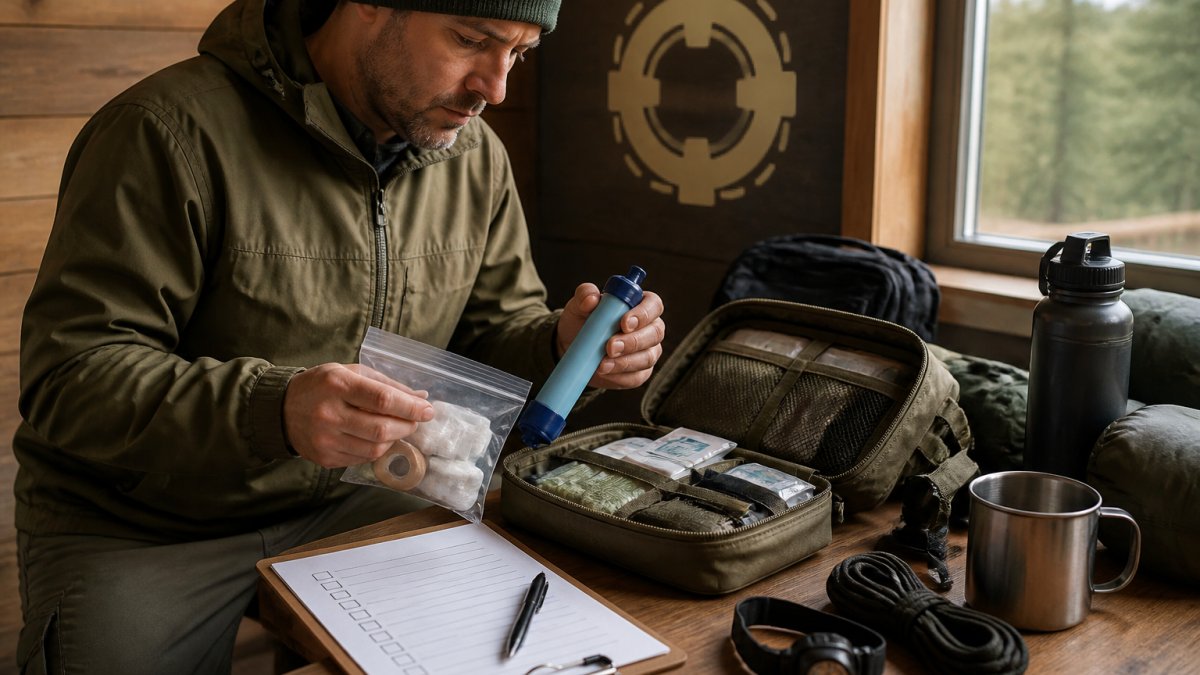
Use this checklist as your starting point. Add or remove items based on your terrain and climate.
- Water: filter, purifier, and storage tested and clean
- Food: rations in date, sealed, and rotated
- Fire: two independent starters, both tested
Run this list before every season change. It takes under an hour and catches small failures before they become big ones.
Solar Generator Testing Checklist for Emergency Power
A solar generator testing checklist confirms your backup power holds a charge and runs your key devices. Test it quarterly, not once a year:
- Charge it fully: Plug into the wall and confirm it reaches 100%.
- Check the display: Look for error codes or odd readings.
- Run a real load: Plug in a phone, a light, and a small fan.
Most people skip the solar panel test, but a panel that worked last summer can fail after a winter in storage, test it in direct sun and watch the input reading. Store the generator in a cool, dry place, since extreme heat shortens battery life, and top off the battery every few months.
Never store a solar generator at 0% charge for months. Many units lose the ability to hold a charge, and the warranty may not cover it. Top it off to about half full before long storage.
Survival Kit Maintenance Schedule: What to Check and When
A survival kit maintenance schedule sets fixed times to inspect, test, and replace gear. Without one, kits rot quietly in a closet. Use this schedule:
| Timeframe | What to Check | Why It Matters |
|---|---|---|
| Monthly | Batteries, water levels, first aid dates | Catches quick failures |
| Quarterly | Solar generator, filters, fire starters | Tests real function |
| Every 6 months | Full kit inventory, food rotation | Prevents expired supplies |
| Annually | Replace expired meds, worn gear | Keeps kit mission-ready |
| After every use | Clean, dry, and restock all items | Stops mold and rust |
The monthly check takes minutes. The quarterly check takes an afternoon. Together they keep your kit ready at all times.
A common mistake is waiting for a storm warning to check gear. By then, stores are packed and shipping delays hit. Build the habit now, when nothing is on the line.
Recognized Testing Standards and Their Limits
A standard is a written, repeatable test method plus pass/fail criteria, nothing more. It is not a badge that says "this gear is good," and that distinction is the difference between reading a spec sheet correctly and being sold by one.
What a Standard Actually Certifies
When a product claims to meet a standard, it claims a specific sample passed a specific test under specific conditions. Three things determine what that claim is worth:
- Scope: What does the standard cover? A fabric standard may test tear strength but say nothing about seam construction. A battery standard may test cell safety but not runtime under load.
- Test method: How was the test run? A waterproof rating tested with a low-pressure spray is not the same as one tested under sustained immersion.
- Conditions: At what temperature, humidity, and duration? A filter rated for cold-weather use is only meaningful if the test was actually run cold.
If a listing cites a standard but not the scope, method, or conditions, you have a marketing claim, not a verified spec.
The Main Standards Bodies You Will See
Several organizations publish the standards that show up on outdoor and emergency gear. Knowing which body covers what helps you judge whether a cited standard is relevant.
- ASTM International standards for consumer and materials testing publishes test methods for materials, textiles, and durability across many product categories.
- ANSI quality and conformity guidance coordinates voluntary consensus standards and accreditation in the United States.
- ISO quality management and product standards covers international management and product standards, including quality systems manufacturers use to document process control.
- NFPA standards for emergency and life safety equipment publishes widely referenced standards for fire, electrical, and life-safety equipment.
- UL Standards and certification for product safety tests and certifies products against safety standards, and its mark indicates a product was evaluated by a recognized testing organization.
A quality-management standard like ISO 9001 tells you a factory has a documented process, not that the product performs well. A product-safety mark like UL tells you the item met a safety test, not that it suits your terrain.
Why No Single Certification Covers All Survival Gear
There is no universal "survival gear certification." Consumer survival gear spans water treatment, fire, shelter, power, navigation, and medical supplies, and each category falls under different standards, or none at all. A tent, a water filter, and a solar generator are not tested against the same document because they do not share a failure mode, so a single logo should never be treated as blanket proof.
How to Read a Standard Without Being Misled
Use this sequence when a product cites a standard:
- Find the exact standard number (for example, a specific ASTM designation), not just the body's name.
- Look up the scope and confirm it covers the property you care about.
- Check the test conditions against your real use, temperature range, duration, load.
- Ask whether the claim is self-declared or third-party verified. A manufacturer saying "meets ASTM X" is different from an independent lab report.
- Request the test report if the claim drives your purchase. A trustworthy seller can provide it.
A standard proves an item passed one test under one set of conditions. It never proves the item suits your climate, your terrain, or your body. Treat every standard as a starting point you still have to verify against real use.
Where Standards Stop and Your Own Testing Begins
Standards test one variable at a time in controlled conditions. Emergencies throw many variables at once, cold, wet, dirty, and under stress. That gap is why the hands-on checks in this guide exist. A standard can tell you a filter passed a lab flow test; only your own test tells you whether it clogs in the muddy water you will actually encounter.
Counterfeit and Misleading Survival Gear Claims to Watch For
Counterfeit and misleading claims are the biggest hidden risk in survival gear.
Watch for these red flags:
- Vague claims: "Military grade" or "unbreakable" with no proof.
- Fake certifications: Logos that do not match the real standard.
- Too-good pricing: Premium specs at a fraction of normal cost.
The Federal Trade Commission guidance on advertising claims requires sellers to back up performance claims with evidence. If a claim sounds too strong, ask for the proof.
Buy from sources you can reach. At Holy Prepper, we curate products for quality and value, and our customer-focused team stands behind every order.
Conclusion: Building a Reliable Quality Check Routine
The real challenge is not buying gear but keeping it ready for the day you need it, a kit you never test is a kit you cannot trust.
Holy Prepper makes that routine easier with carefully chosen survival and emergency gear, fast and simple online shopping, and a customer-focused team ready to help.
Get started with Holy Prepper and build an emergency kit you can count on when it matters most.
Frequently Asked Questions
How can you tell if survival gear is well made?
Check materials and construction first: look for double-stitched seams on packs, stainless steel or titanium components on tools, and sealed bearings on folding knives. Verify that water filters carry NSF/ANSI 42 or 53 certification, and that solar generators list UL 2743 compliance. Inspect for loose fittings, uneven coatings, or chemical odors. Field-test critical items before relying on them, and check whether the manufacturer publishes specific performance benchmarks rather than vague claims.
How often should you inspect and replace emergency preparedness gear?
Inspect your full survival kit every six months, and check high-use items like water filters and fire starters before every trip. Replace expired food and medications immediately. Test solar generators under load quarterly. Rotate stored water every six months. Replace water filter cartridges per the manufacturer's rated gallon capacity, not just by calendar date. Batteries should be tested every three months and replaced annually if they show voltage drops under load.
What should you test before relying on a solar generator in an emergency?
Run a full charge-discharge cycle and measure actual output against the rated watt-hours. Test every output port (AC, USB, DC) with a known load. Verify that the inverter handles your critical devices' surge wattage, not just running wattage. Check that solar panels reach rated input under real sunlight. Confirm the battery management system cuts off at the correct low-voltage threshold. Repeat this test quarterly and before any extended outage season.
What are the most important survival gear items for 2026?
Prioritize water purification (filter straw or pump with NSF certification), fire-starting tools (ferrocerium rod plus waterproof matches), shelter (emergency bivy or tarp), navigation (map, compass, and a backup GPS), and a comprehensive first aid kit. Add a solar generator for power-dependent medical devices or communication gear. Each item should pass a documented quality check before it goes into your kit, and every piece needs a maintenance schedule to stay reliable.