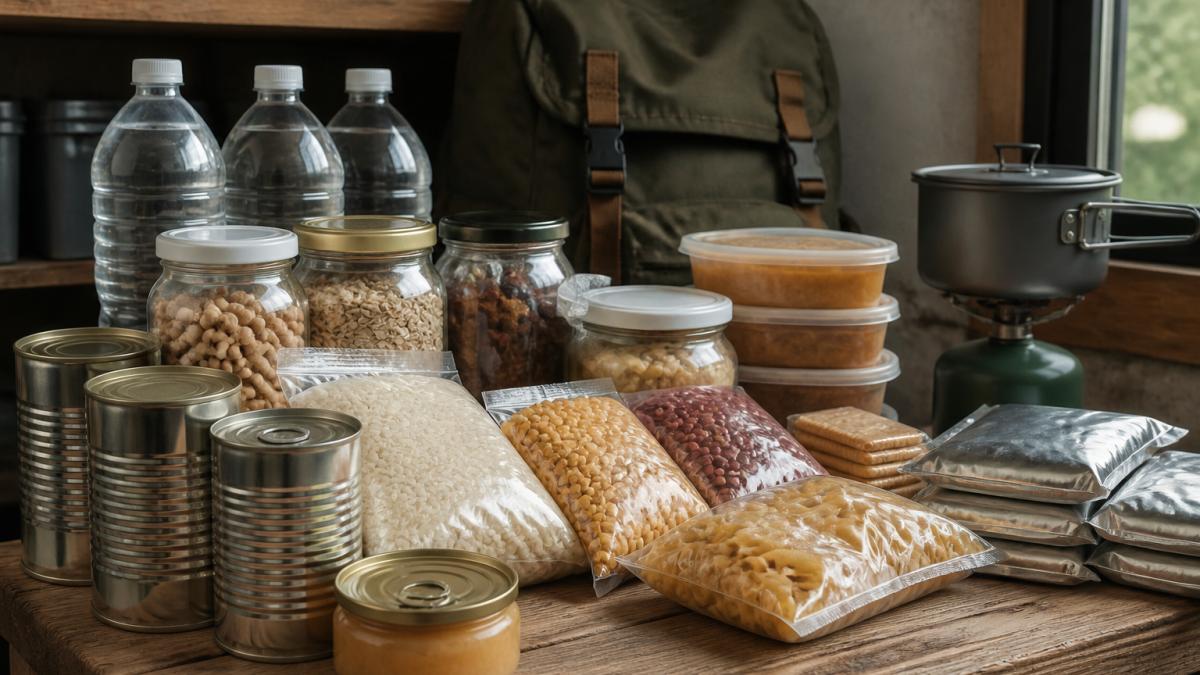
 blog
blog
7 Best Emergency Food Supplies for Families in 2026
Table of Contents
- What to Look for in Emergency Food Supplies for Families
- 7 Best Emergency Food Supplies for Families
- Emergency Food Supply Checklist for Families
- Emergency Food Calorie Requirements for Your Household
- How to Store Emergency Food at Home
- Common Mistakes to Avoid When Buying Emergency Food
- Conclusion
- Frequently Asked Questions
Last Updated: September 28, 2026
What to Look for in Emergency Food Supplies for Families
Building an emergency food supply for a family starts with two questions: how long does the food last, and will it actually feed everyone in your household? Emergency food is any shelf-stable, calorie-dense food stored in advance for use during disasters, outages, or supply disruptions. Emergency food is any shelf-stable, calorie-dense food stored in advance for use during disasters, outages, or supply disruptions. A family supply is different from a solo stash because portions, allergens, and picky eaters all matter.
Here's what most buyers get wrong: they shop by bucket size instead of by calories per person per day.
Shelf Life and Storage Conditions
Shelf life is the number of years a sealed product stays safe and nutritious under recommended storage. Freeze-dried meals commonly hold their quality for 25 years or more, while canned goods typically last 2 to 5 years. Heat and moisture are the enemies. A garage that hits 90°F in summer can cut shelf life dramatically, so a cool, dark closet beats a shed every time.
Calories, Serving Sizes, and Family Portions
Serving sizes on emergency food labels rarely match what a hungry adult eats during stress. Check total calories per pouch, not servings. A common approach is to plan 2,000 calories per adult per day and 1,400 to 1,600 for children. Multiply that by your family size and the number of days you're preparing for.
7 Best Emergency Food Supplies for Families
These seven categories cover the range most families need, from a full 30-day kit to a lightweight grab-and-go option.
1. 30-Day Freeze-Dried Family Kit
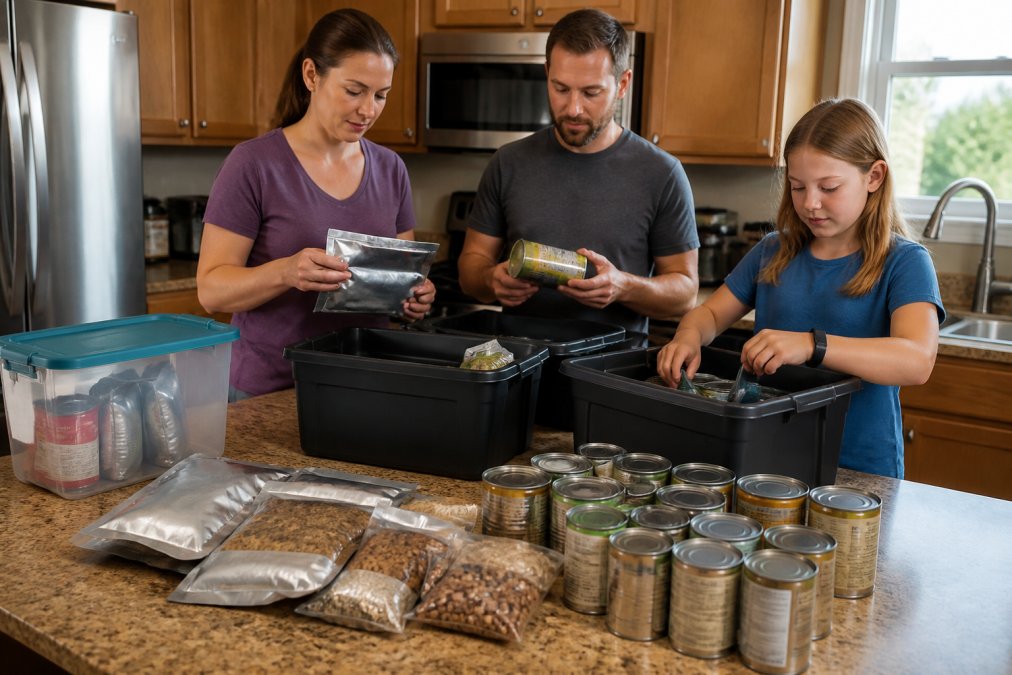
A 30-day freeze-dried kit is the backbone of a serious family plan. These kits pack breakfasts, lunches, dinners, and often snacks into resealable pouches that just need hot water. The best versions include a variety of meals so nobody revolts by week two. Maintaining this level of nutritional stability allows you to focus on the logistics of outdoor living, ensuring that your family camping gear is as reliable as the calories stored in your pantry.
Pros: Long shelf life, lightweight, easy to prepare with minimal water. Cons: Requires a heat source and clean water, which you must store separately.
2. 72-Hour Grab-and-Go Bucket
For evacuations, a 72-hour bucket is the one you can carry. It holds three days of ready-to-eat or easy-prep food for a small family in a single stackable container.
Pros: Portable, affordable entry point, no cooking required for many items. Cons: Only covers three days, so it's a supplement, not a full plan.
3. 25-Year Shelf-Stable Meal Pouches
Individual meal pouches with a 25-year shelf life let you build a custom supply without committing to a fixed kit. Buy the meals your family actually eats and rotate as needed.
Pros: Maximum flexibility, longest shelf life, easy to portion. Cons: Costs more per meal than bulk kits, and you assemble it yourself.
4. High-Calorie Emergency Ration Bars
Ration bars deliver dense calories in a compact, no-cook format. They're ideal for bug-out bags and car kits where space and weight are tight.
Pros: No water or heat needed, extremely portable, long shelf life. Cons: Limited flavor variety; not meant for long-term morale.
5. Family-Size Canned Goods Starter Pack
Canned goods remain the most affordable way to build calories fast. A starter pack of family-size cans covers staples like beans, vegetables, and protein without any special storage equipment.
Pros: Lowest cost per calorie, familiar foods, no preparation barrier. Cons: Heavy, shorter shelf life, requires manual rotation.
6. Dehydrated Fruit and Vegetable Mix
Dehydrated produce fills the nutrition gap that calorie-dense kits miss. Vitamins and fiber matter when you're eating the same three meals for a week.
Pros: Lightweight, long shelf life, adds variety and nutrients. Cons: Needs rehydration; limited calories on its own.
7. Emergency Water and Food Combo Kit
Water is the item most families forget. A combo kit bundles food with sealed water pouches or a filtration method, so you're not scrambling for both at once.
Pros: Solves the two biggest survival needs in one purchase, convenient. Cons: Heavier and pricier than food-only options.
| Supply Type | Shelf Life | Best For | Main Drawback |
|---|---|---|---|
| 30-Day Freeze-Dried Kit | 25+ years | Full household coverage | Needs water and heat |
| 72-Hour Bucket | 5-25 years | Evacuation | Only 3 days |
| Meal Pouches | 25 years | Custom building | Higher per-meal cost |
| Ration Bars | 5+ years | Bug-out bags | Limited variety |
| Canned Goods Pack | 2-5 years | Budget buyers | Heavy, needs rotation |
| Dehydrated Produce | 10-25 years | Nutrition gap | Low calories alone |
| Water + Food Combo | Varies | One-stop shopping | Heavier, pricier |
Emergency Food Supply Checklist for Families
An emergency food supply checklist keeps you from buying randomly. Use this as a starting point and adjust for your household size and dietary needs.
- 2,000 calories per adult per day, stored for your target duration
- At least one no-cook option per day (ration bars, ready-to-eat pouches)
- One gallon of water per person per day
- A manual can opener and a heat source with fuel
- Infant formula, pet food, and allergy-safe items if applicable
- A written inventory with purchase dates taped to the bin
Holy Prepper stocks many of these categories in one place.
Emergency Food Calorie Requirements for Your Household
Emergency food calorie requirements depend on age, activity level, and stress. Plan on 2,000 calories per adult per day, 1,400 to 1,600 for children, and adjust upward for cold climates or heavy physical work. A family of four preparing for two weeks needs roughly 112,000 calories total. That number is the single most useful figure in your planning, because it converts vague "stock up" advice into a shopping list you can actually fill.
How to Store Emergency Food at Home
Knowing how to store emergency food at home is what separates a supply that lasts from one that spoils. Keep everything in a cool, dark, dry space between 50°F and 70°F. Use food-grade bins with sealed lids, elevate them off concrete floors, and label every container with contents and dates. Rotate the oldest items into daily meals and replace them, so nothing sits untouched for a decade.
Common Mistakes to Avoid When Buying Emergency Food
The biggest mistake families make is buying food without buying water. You can survive weeks without food but only days without water, so a food-only plan is incomplete. The second mistake is ignoring dietary restrictions until an emergency hits. If someone in your house can't eat gluten or dairy, a generic kit may leave them with nothing. The third is never testing the food. Open one pouch, cook it, and taste it before you commit to a 30-day supply.
Conclusion
The hard part of emergency food planning isn't buying, it's buying the right mix before you need it. Holy Prepper carries freeze-dried kits, ration bars, water solutions, and first aid essentials in one fast, user-friendly store, with carefully chosen products and pricing built for real family budgets. Start with calories, add water, and fill the gaps from there. Get started with Holy Prepper and build a supply your family can actually rely on.
Frequently Asked Questions
How much emergency food does a family of four need for two weeks?
Plan for 1,600 to 2,400 calories per person per day, depending on age and activity level. For a family of four over 14 days, that is roughly 90,000 to 134,000 total calories. A mix of freeze-dried meals, calorie bars, and canned goods works well. Store at least one gallon of water per person per day for drinking and basic hygiene. Rotate items as you buy new supplies so nothing expires before you need it.
What is the best way to store emergency food at home to make it last?
Keep emergency food in a cool, dark, dry space between 50 and 70 degrees Fahrenheit. Use airtight containers or mylar bags with oxygen absorbers for dry goods. Elevate bins off concrete floors to avoid moisture. Label everything with purchase dates and rotate older items into daily meals. Freeze-dried pouches and canned goods hold up best in these conditions, often lasting 10 to 25 years.
Is freeze-dried food better than dehydrated food for emergency kits?
Freeze-dried food keeps more of its original taste, texture, and nutrients, and it rehydrates faster. It also lasts longer, often 20 to 25 years when stored properly. Dehydrated food costs less and works well for fruits, vegetables, and jerky. For a family emergency food supply, a combination of both gives you variety, longer shelf life, and better value. Check calorie counts per pouch before buying either type.
How do I rotate emergency food supplies to prevent waste?
Use a first-in, first-out system. When you buy new emergency food, move older items to the front of your pantry or bins and use them in regular meals. Check expiration dates every six months and set a calendar reminder. Replace anything within six months of expiring. This keeps your emergency food supply checklist current and ensures nothing goes to waste while still giving you a fully stocked backup.