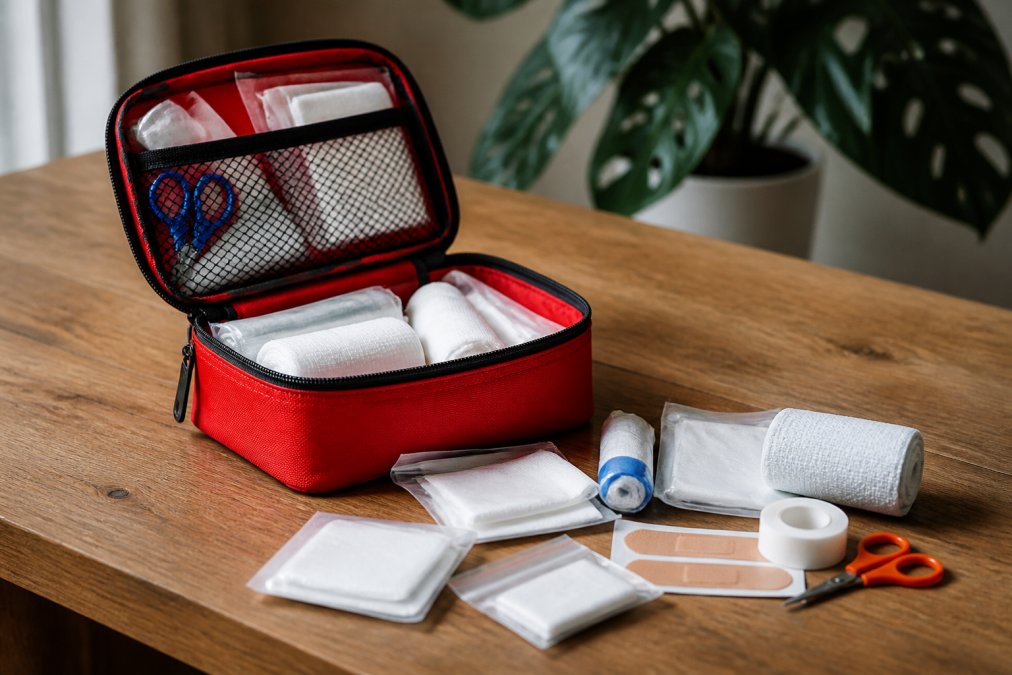
 blog
blog
Best First Aid Kit: 2026 Buying Guide & Checklist
Table of Contents
- How to Choose the Best First Aid Kit for Your Needs
- Essential First Aid Kit Checklist: What Must Be Inside
- Trauma Kit Essentials: When Basic Supplies Aren't Enough
- First Aid Kit Expiration Dates: What to Check and When to Replace
- Customizing Your Kit for Specific Environments
- Training and Certification: Skills That Make Your Kit Effective
- Sustainability and Eco-Friendly Medical Supplies
- Frequently Asked Questions
Last Updated: September 23, 2026
How to Choose the Best First Aid Kit for Your Needs
The best first aid kit is built for your environment, activity, and skill level, not the priciest option on the shelf. At Holy Prepper, we help hikers, families, and preparedness-minded households match the right kit to the right risk. This guide covers what belongs in a kit, what expires, and the mistakes that leave people unprepared.
Match the Kit to Your Activity and Environment
A day hike calls for a very different kit than a week-long backcountry trip or a household emergency stash. Match your kit to three variables: distance from help, likely injury types, and weather exposure.
- Urban and commuter: adhesive bandages, antiseptic towelettes, nitrile gloves
- Day hiking: adds blister care, elastic wrap, tick remover
- Backcountry: adds tourniquet, hemostatic agent, splint, emergency blanket
- Household: larger quantities, burn dressing, CPR mask, medications
Portability, Weight, and Durability Factors
Portability and durability decide whether you actually carry your kit. Too heavy, and it stays in the car; not waterproof, and it gets ruined in a wet pack.
FEMA's guide to building a basic emergency supply kit
Essential First Aid Kit Checklist: What Must Be Inside
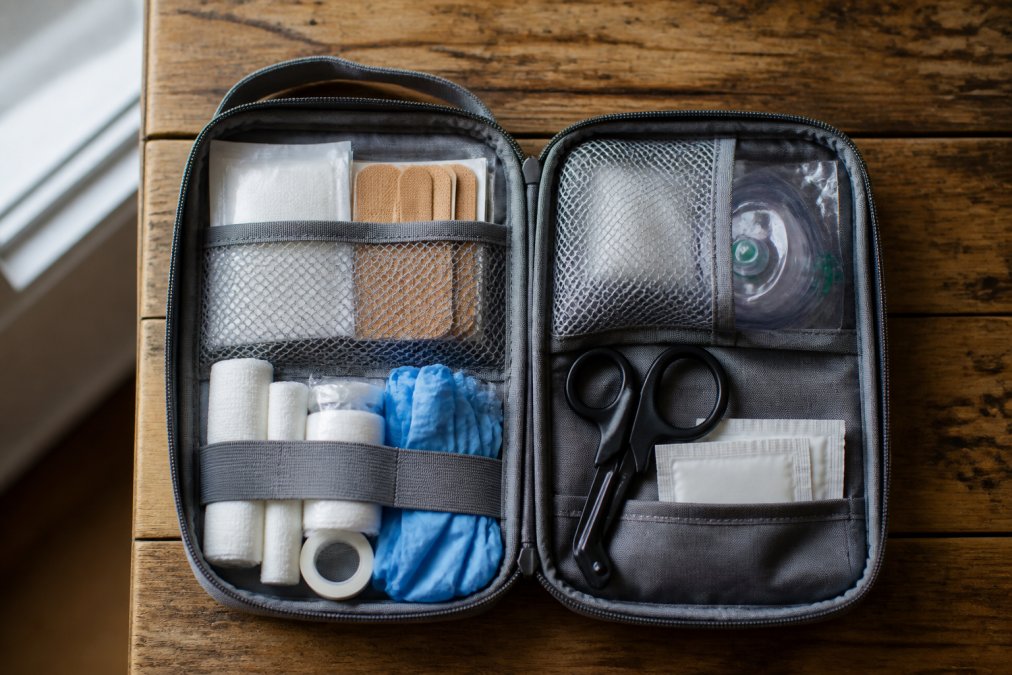
A complete first aid kit checklist covers wound care, protection, and tools for common injuries. The essentials barely change between kits; only quantity and trauma items do.
Basic Supplies Every Kit Needs
Every kit, from a pocket pouch to a household bin, should contain these basics:
- Adhesive bandages in assorted sizes
- Absorbent compress dressings and sterile gauze pads
- Medical tape and elastic wrap
- Antiseptic towelettes and antibiotic ointment
- Nitrile gloves (at least two pairs)
- Trauma shears and tweezers
- CPR mask and emergency blanket
- Tick remover and a basic splint
Organization and Accessibility
Organization separates a kit you can use under stress from a bag of loose supplies. Group items by function, label each section, and keep critical supplies on top.
Trauma Kit Essentials: When Basic Supplies Aren't Enough
A trauma kit addresses life-threatening bleeding and airway issues basic supplies can't handle. The difference comes down to hemostatic agents, tourniquets, and chest seals.
Hemostatic Agents, Tourniquets, and Chest Seals
These three items form the core of trauma readiness. A hemostatic agent, usually gauze impregnated with a clotting compound, controls severe bleeding when direct pressure isn't enough. A tourniquet stops extremity bleeding fast. A chest seal covers a penetrating chest wound and prevents air from entering the chest cavity. Beyond these acute trauma supplies, maintaining a well-stocked supply of over the counter medicine ensures you are prepared to manage common ailments and minor health issues that arise during daily activities.
| Item | Purpose | When to Use |
|---|---|---|
| Hemostatic gauze | Stops severe bleeding | Deep wounds, junctional areas |
| Tourniquet | Stops limb bleeding | Uncontrolled extremity hemorrhage |
| Chest seal | Seals chest wounds | Penetrating chest trauma |
| Trauma shears | Cuts clothing and gear | Accessing a wound quickly |
Stop the Bleed program information
First Aid Kit Expiration Dates: What to Check and When to Replace
First aid kit expiration dates matter because medications, antiseptics, and sterile packaging lose effectiveness over time. Check your kit every six months and replace anything past its date.
Here's what typically expires and how to handle it:
- Medications and ointments: replace at the printed date; potency drops after
- Antiseptic towelettes: dry out and lose effectiveness
- Sterile packaging: replace if the seal is broken, even if undated
- Adhesive bandages: adhesive degrades; replace if they no longer stick
Customizing Your Kit for Specific Environments
Customization turns a generic kit into one that fits your real risks. Most guides say "add items based on your environment" and stop there. The useful version maps a specific hazard to a specific item, quantity, and failure mode.
Build Around the Hazard, Not the Hobby
Start with the injury your environment is most likely to produce, then work backward. A desert day hike kit and an alpine climb kit can share 80 percent of their contents and still need completely different additions.
- Desert and arid heat: add oral rehydration salts (two to four packets per person per day of activity), a second emergency blanket for shade, and more irrigation saline. Heat illness, not bleeding, is the leading risk; plain water alone can worsen hyponatremia in long exertions.
- Alpine and cold: add a compact bivy sack, chemical hand warmers (two to four pairs), and a wider elastic wrap that works over gloves. Insulation between the casualty and the ground matters most, conductive heat loss through snow is faster than convective loss through air, which is why a blanket alone underperforms a closed bivy.
- Tropical and humid: add permethrin-treated clothing patches, a second tick remover, and antifungal powder. Insect-borne illness and fungal infections outnumber traumatic injuries in most tropical itineraries; antifungal powder prevents the moisture-driven skin breakdown that turns a minor abrasion into an infection.
- Wildfire and hurricane zones: add N95 or P100 respirators (two per person), burn dressings, and more water purification. Smoke inhalation and contaminated floodwater, not cuts and scrapes, are the hazards that send people to the kit.
- Tick-heavy regions: add a fine-tipped tick remover and a small mirror, most tick bites occur on the back and scalp, where you cannot see to remove the tick yourself.
Household Customization: Who You Are Protecting
A household kit is not a scaled-up hiking kit. It is shaped by the people in the house.
- Infants and toddlers: add a nasal aspirator, infant-dose acetaminophen, a digital thermometer, and small adhesive bandages. Pediatric dosing is weight-based, not a halved adult dose, so keep those formulations separate and labeled.
- Older adults: add a current medication list, a spare seven-day pill organizer, and a blood pressure cuff if anyone monitors hypertension. Polypharmacy interactions commonly escalate household emergencies.
- Pets: add a pet-specific pouch with gauze, self-adhesive wrap, a muzzle, and a spare leash. An injured dog in pain will bite the person trying to help it, so a muzzle is the difference between treating the animal and abandoning the attempt.
Quantity, Not Just Presence
Most guides list items but not quantities. A kit with one gauze pad runs out on the first serious wound. Stock for the number of people in your group multiplied by the hours until definitive care is available, a solo day hiker two hours from a trailhead needs less than a family of four three days from a hospital after a storm.
Training and Certification: Skills That Make Your Kit Effective
Training converts supplies into outcomes. A well-stocked kit in untrained hands underperforms a basic kit in trained ones. Knowing which tool to reach for, and when not to use it, determines whether your kit works.
Match the Tool to the Training
Every item in a trauma kit has a skill floor. Carrying a tool you are not trained to use is a liability, not preparedness.
- Adhesive bandages, gauze, tape, elastic wrap: no formal training required. These are the items a layperson can use correctly after reading the packaging.
- CPR and AED: require hands-on certification. The American Heart Association and the American Red Cross offer courses, typically a few hours long, with written and skills components. Certification is generally valid for two years.
- Tourniquets: require training. A tourniquet placed too high, too loose, or over a joint can fail to control bleeding or cause nerve damage. Stop the Bleed courses, developed by the American College of Surgeons and supported by the Department of Defense, teach application in a single session and are widely available at no cost.
- Hemostatic gauze: requires training to pack correctly. The gauze must be packed directly against the bleeding vessel and held under pressure, not laid on top of the wound. Improper packing is a common failure mode.
- Chest seals: require training to place and monitor. An unmonitored seal can convert a treatable open chest wound into a life-threatening tension pneumothorax.
- Splints and slings: require training to immobilize without causing further injury. Improper splinting of a suspected fracture can worsen soft-tissue damage.
Certification Pathways Worth Knowing
- Basic first aid and CPR/AED: the entry point. Offered by the American Red Cross, the American Heart Association, and many community colleges and fire departments. Often HSA or FSA eligible.
- Stop the Bleed: a one-session course focused specifically on severe bleeding control, tourniquets, wound packing, and pressure. Free or low-cost in most communities.
- Wilderness First Aid (WFA): typically a two-day course for hikers, climbers, and backcountry travelers. Covers extended-care decision-making when evacuation is hours or days away.
- Wilderness First Responder (WFR): a longer certification, often 70 to 80 hours, for trip leaders and professionals who operate far from definitive care.
Psychological First Aid: The Skill Most Kits Ignore
Psychological first aid is the practice of stabilizing someone emotionally during and after a crisis. Most gear guides skip it, yet panic and shock cause as many problems as physical injuries. A person in shock may not feel pain, may not answer questions, and may refuse help, all of which complicate physical treatment.
- Stay calm and introduce yourself. A calm voice regulates the other person's nervous system better than shouted instructions.
- Keep the person warm. Shock causes peripheral vasoconstriction and a drop in core temperature. A blanket is a medical intervention, not a comfort item.
- Reduce stimulation. Lower the volume, reduce the number of people speaking, and give one instruction at a time. Overload worsens panic.
- Do not force details. Asking a shocked person to recount what happened can re-traumatize them. Let them volunteer information.
- For children: use short sentences, get at eye level, and use physical reassurance. Children take their emotional cues from the nearest calm adult.
- Connect to help. If the person is alone, stay with them until a responder or a trusted contact arrives.
Stop the Bleed course information
American Red Cross first aid and CPR training
Sustainability and Eco-Friendly Medical Supplies
Sustainability is reshaping how buyers think about medical supplies. Reusable and biodegradable options reduce waste without sacrificing function.
Frequently Asked Questions
What is a must-have in a first aid kit?
Every first aid kit needs adhesive bandages in multiple sizes, sterile gauze pads, medical tape, antiseptic towelettes, nitrile gloves, trauma shears, and an elastic wrap. For home kits, add a CPR mask, burn dressing, and a thermometer. For outdoor or trauma kits, include a tourniquet, hemostatic agent, and splint. The best first aid kit covers wound care, bleeding control, and basic stabilization until professional help arrives.
How often should you replace items in a first aid kit?
Check your first aid kit every six months and replace anything past its expiration date. Adhesive bandages lose stickiness after about two years. Antiseptic towelettes and antibiotic ointments expire within one to three years. Medications have specific dates printed on packaging. Set a calendar reminder and restock expired supplies immediately so your kit stays ready for emergencies.
What is the difference between a basic kit and a trauma kit?
A basic first aid kit handles minor cuts, scrapes, burns, and sprains with bandages, gauze, and antiseptic. A trauma kit essentials list includes life-saving gear for severe bleeding and injuries: tourniquets, hemostatic agents, chest seals, and large trauma dressings. Basic kits work for everyday accidents. Trauma kits serve situations where minutes matter and professional medical help is far away.
Are first aid kits HSA or FSA eligible?
Many first aid kit supplies qualify for reimbursement through a Health Savings Account or Flexible Spending Account. Eligible items typically include bandages, gauze, antiseptic wipes, thermometers, and certain medications. Trauma supplies like tourniquets and hemostatic agents may also qualify. Check with your HSA or FSA administrator for a full list of approved expenses before purchasing.