 ultimate-guide
What to Include in a Family Go Bag: 2026 Guide
Table of Contents
- Start With the Scenarios Your Family Actually Faces
- Water, Food, and Hydration for a Family Go Bag
- First Aid, Medications, and Hygiene Supplies
- Essential Documents for Emergency Kits and Cash Reserves
- How Long Should a Go Bag Last? Shelf Life by Item
- The Go Bag Maintenance Schedule That Keeps Gear Ready
- Customize by Family Member: Kids, Pets, and Mobility Needs
- Where Holy Prepper Fits In
- Frequently Asked Questions
Last Updated: October 2, 2026
Start With the Scenarios Your Family Actually Faces
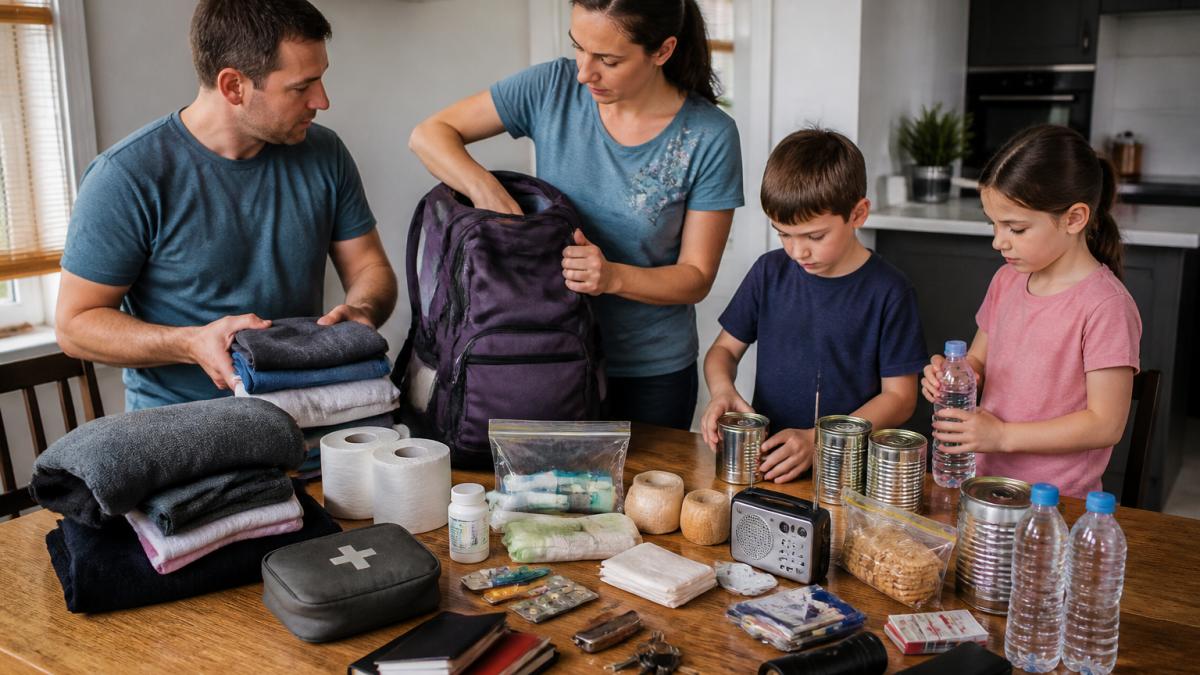
A family go bag is a portable kit that keeps your household self-sufficient for at least 72 hours after an evacuation order or sudden displacement. Most families build one backward, buying gear first, then figuring out what it's for, and end up with three fire starters and no insurance policy copies.
- Wildfire or flood zone: fast evacuation, documents and medications first, assume you won't return for days
- Hurricane or severe storm: shelter-in-place plus possible power loss, water and lighting matter most
- Earthquake or tornado: no warning at all, so the bag has to live somewhere you can grab it in seconds
Water, Food, and Hydration for a Family Go Bag
Water and food are where families either overpack weight or underpack calories, get the ratio wrong and the bag becomes uncarryable.
Water Storage and Purification
Plan on one gallon per person per day for drinking and basic sanitation. For a family of four over three days, that's twelve gallons, far too heavy to carry. The practical answer is a split system: ready-to-drink water in the bag, plus lightweight purification for refills.
- Two collapsible water bottles per person, filled
- Water purification tablets or a squeeze filter for refills
- One sturdy wide-mouth container for scooping and mixing
Non-Perishable Food That Kids Will Eat
The best emergency food is food your children will actually eat under stress. Protein bars, peanut butter pouches, crackers, and shelf-stable fruit cups beat freeze-dried meals that require water and a long wait.
First Aid, Medications, and Hygiene Supplies
A first-aid kit and a hygiene kit are not the same thing, and families routinely merge them into one overcrowded pouch. Keep them separate so you can find a bandage without digging past a toothbrush.
Your medical layer needs three parts:
- A general first-aid kit with bandages, gauze, antiseptic, tweezers, and a thermometer
- A seven-day supply of every prescription medication your household takes, rotated before it expires
- A written medical history card for each family member, including allergies, conditions, and dosages
Essential Documents for Emergency Kits and Cash Reserves
Documents are the one category where a single mistake, a soaked folder, a dead phone, a stolen wallet, can cost weeks of recovery. Treat this as two layers: a physical layer that works with no power, and a digital layer that survives a lost bag.
The Physical Layer: One Waterproof Pouch, One Rule
Everything goes in a single waterproof pouch or sealed freezer bag inside a rigid folder, and that pouch never rides in the same pocket as your everyday wallet. If your bag is stolen or soaked, you still need proof of who you are.
- Copies of IDs, birth certificates, and Social Security cards (copies, not originals, originals stay in a fireproof home safe)
- Insurance policies for home, health, and auto, including the policy numbers and the claims phone line
- A written emergency contact list, including one out-of-state contact, after a regional disaster, local lines jam first and long-distance calls often get through
- Spare keys to your home and vehicles
- A recent photo of each family member, labeled with name and date
The Digital Layer: Encrypted Drive vs. Cloud
Scan everything once, then split copies across two methods so no single failure wipes you out:
- Encrypted USB drive in the pouch. Works with no internet, but can be lost and needs a computer. Use hardware encryption or a password-protected archive, and store the password elsewhere.
- Cloud copy on a provider you trust. Survives a lost bag and is reachable from any device, but fails when the grid is down. Re-verify files open correctly every six months, corrupted scans are a silent failure.
How Much Cash, and in What Bills
Card readers and ATMs fail during widespread outages, so physical cash covers fuel, food, and a motel room when nothing else works. A practical target is two to three nights of food, fuel, and lodging for your household, size it to your budget rather than a fixed figure.
- Keep it in small bills, nobody can break a large one when registers are down.
- Split it: most in the pouch, a smaller amount in a second location in case one is lost.
- Add a few quarters for payphones, vending machines, and coin-operated laundry if you end up in a shelter.
The Document That Gets Forgotten
A printed one-page family communication plan belongs in this pouch, not just on a phone. It should list where you'll meet if separated, who calls whom, and the out-of-state contact. Texts often get through when voice calls don't, so agree in advance that everyone texts the out-of-state contact rather than calling each other.
How Long Should a Go Bag Last? Shelf Life by Item
A go bag should last at least 72 hours, but the items inside expire on wildly different schedules. Treating the bag as one unit is why so many kits fail inspection a year after they're built.
What Expires and What Doesn't
| Item | Typical Shelf Life | Rotation Trigger |
|---|---|---|
| Bottled water | 1-2 years | Check yearly, replace if cloudy |
| Canned and packaged food | 1-3 years | Date-stamp, rotate at 6 months left |
| Prescription medication | Varies by drug | Replace before expiration |
| Batteries | 5-10 years | Test yearly, replace if weak |
| First-aid supplies | 3-5 years | Check sterility seals annually |
| Documents and cash | No expiry | Verify contact list every 6 months |
The items that never expire are the ones families forget: a multi-tool, an emergency blanket, a hand-crank radio, a whistle, and a printed emergency communication plan. Those last for years and quietly do the most work.
The Go Bag Maintenance Schedule That Keeps Gear Ready
- Every six months: check food and water dates, test flashlights and the hand-crank radio, confirm medications are current
- Every twelve months: replace batteries, re-verify the emergency contact list, check that clothing still fits growing kids
- After any use: restock immediately, don't wait for the next scheduled check
Store the bag somewhere you can reach without a flashlight, and keep a smaller duplicate in each vehicle if your budget allows. A power bank belongs in the car version, where you're most likely to need it.
Customize by Family Member: Kids, Pets, and Mobility Needs
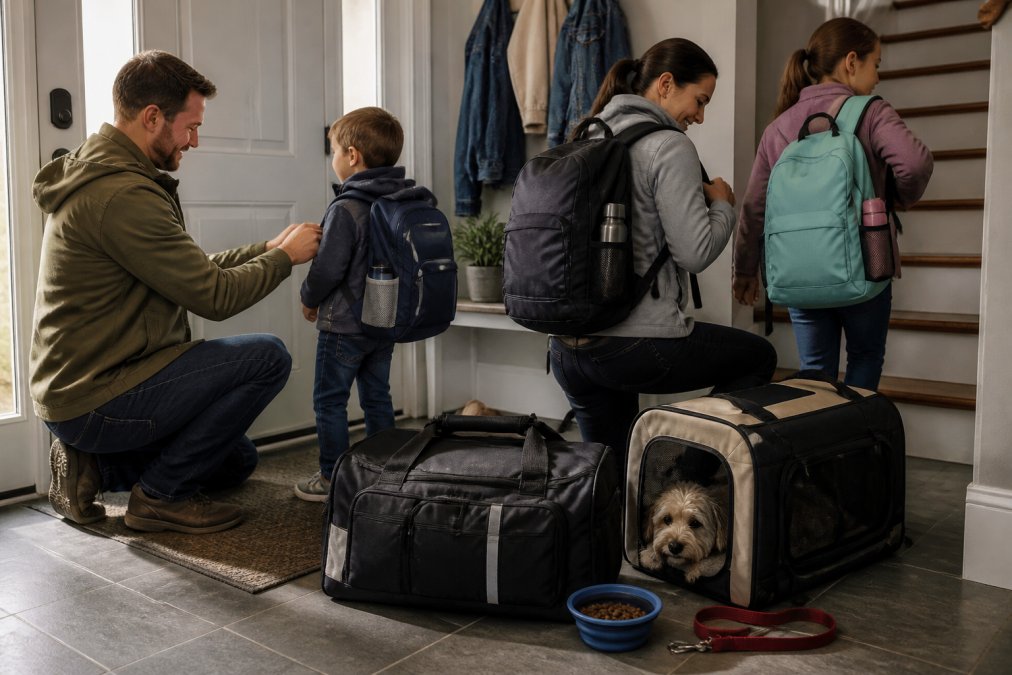
One shared bag works for a couple. It does not work for a family with a toddler, a dog, and a grandmother who uses a cane. The fix is a two-tier system: a small personal pouch for each person, plus shared supplies in the main bag. But before you add a single item, weigh the whole thing, the most common reason a family go bag fails is that nobody can actually carry it.
Weight and Ergonomics: The Step Most Guides Skip
A 72-hour kit for four people, packed the way most checklists suggest, easily runs past 40 pounds, fine in a closet, useless on a stairwell. Apply a weight-to-utility test to every item:
- Carry the water, don't stockpile it. Twelve gallons for a family of four is roughly 96 pounds. Pack one or two filled bottles per person and rely on a filter or purification tablets for the rest.
- Assign loads by body size. Adults carry the shared gear; kids carry only their own pouch and a light comfort item, no more than about 10 to 15 percent of body weight.
- Use a real backpack, not a duffel. Padded shoulder straps and a hip belt move weight onto your hips, the difference between walking a mile and stopping after a block.
- Keep the heaviest items high and close to your back to stay balanced when moving fast.
- Test it. Walk around the block and climb a flight of stairs with the loaded bag. If you can't do that comfortably, remove weight before adding anything else.
Scenario-Specific Customization
A wildfire evacuation, a hurricane shelter-in-place, and an urban bug-out are not the same kit. Adjust the shared bag to your most likely scenario:
- Wildfire or flood evacuation: documents, medications, and a full tank of fuel matter most. Assume you won't return for days, so pack like a short trip, not a camping trip.
- Shelter-in-place (hurricane, severe storm, extended power loss): water, lighting, and a way to cook or heat food without power lead the list. You're staying put, so weight matters less and volume matters more.
- No-warning events (earthquake, tornado): the bag has to live somewhere you can grab it in seconds, by the door, not in a basement. Keep a smaller duplicate in each vehicle.
Packing for Infants and Young Children
Infants need their own supply line: formula or breast milk, bottles, diapers, wipes, a change of clothes, and a comfort item. Older kids can carry their own small backpack with a flashlight, a snack, and a favorite toy, giving them a job reduces panic. Re-check clothing sizes every six months; kids outgrow a packed outfit faster than anything else.
Pet Emergency Supplies
Pet emergency supplies are the category most families skip entirely. Pack a leash, a collar with ID tags, a folding bowl, several days of food, any medication, and a copy of vaccination records. A pet carrier or sling matters if your animal can't walk far. If you may end up at a shelter, confirm in advance which ones near you accept pets, many do not.
Mobility and Medical Needs
For a family member who uses a cane, walker, or wheelchair, the personal pouch should carry a spare cane tip or small repair kit, a list of their medical equipment and model numbers, and a printed medication schedule. If a device needs power, note the charging method and pack the cable.
Where Holy Prepper Fits In
Holy Prepper offers a curated selection of survival and emergency preparedness products, from first aid to pet care essentials, backed by years of industry experience and a customer-focused approach. Pricing depends on the items and quantities you choose, so check the site for current options.
Frequently Asked Questions
What should go in a family go bag first?
Start with water, non-perishable food, and a first-aid kit, since those cover the first 72 hours. Add a hand-crank radio, flashlight, power bank, and a whistle for signaling. Then layer in essential documents, medications, hygiene items, and weather-appropriate clothing. If you have pets, pack their food and a copy of vaccination records. Build the family go bag in that order so the most critical items are never left out when you are in a hurry.
How much cash should be kept in a family emergency kit?
A practical target is enough to cover two to three days of gas, food, and a motel room for your family size, in small bills. ATMs and card readers often fail during power outages, so cash reserves matter. Store the money in a waterproof pouch inside the bag, split between two locations in case one is lost. Check the bills during your go bag maintenance schedule and replace any that are damaged or outdated.
What documents are essential to include in an emergency go bag?
Put copies of birth certificates, Social Security cards, insurance policies, passports or state IDs, and a written emergency contact list in a waterproof storage pouch. Include a short medical history for each family member listing prescriptions, allergies, and dosages. Digital copies on an encrypted USB drive add redundancy, but keep paper versions too since phones and cloud access may be unavailable. Refresh the copies each year as part of your maintenance routine.
How often should you rotate items in your family go bag?
Check the bag every six months and replace food, water, and medications before they expire. A full go bag maintenance schedule works best as a twice-yearly event, timed with daylight saving changes so it is easy to remember. At each check, test flashlights and the hand-crank radio, confirm the power bank still holds a charge, swap out clothing for the current season, and update documents. Write the next check date on a card inside the bag.
How do you customize a go bag for children and infants?
Give each child a smaller pack with a change of clothes, a comfort item, and a few snacks they can carry themselves. For infants, include diapers, wipes, formula or breast milk supplies, a bottle, and a light blanket. Add a laminated card with the child's name, your phone number, and any allergies. A family reunification plan, with a meeting spot and an out-of-area contact, belongs in every child's bag as well.
How do you store a go bag so it is easily accessible?
Keep bags near an exit, such as a front closet or garage shelf, not buried in a basement. Use waterproof storage bins or packs with labeled handles so each family member can grab their own in seconds. Avoid locking the bags inside a car, where heat ruins food and medications. If space allows, keep a smaller evacuation kit in the trunk for commutes, and store the main family go bag at home where everyone knows its location.