 listicle
Disposable Ambu Bag Review: Top Picks for 2026
Table of Contents
- Why a Disposable Ambu Bag Belongs in Your Emergency Kit
- Quick Comparison: Top Disposable Resuscitators
- Ambu SPUR II Disposable Resuscitator Review
- The BAG II Disposable Resuscitator Review
- MADA Disposable Manual Resuscitator Review
- How to Use an Ambu Bag: Step-by-Step Guide
- Disposable vs Reusable Resuscitators: Which Is Right for You?
- Common Mistakes to Avoid with Disposable Ambu Bags
- Frequently Asked Questions
Last Updated: October 4, 2026
Why a Disposable Ambu Bag Belongs in Your Emergency Kit
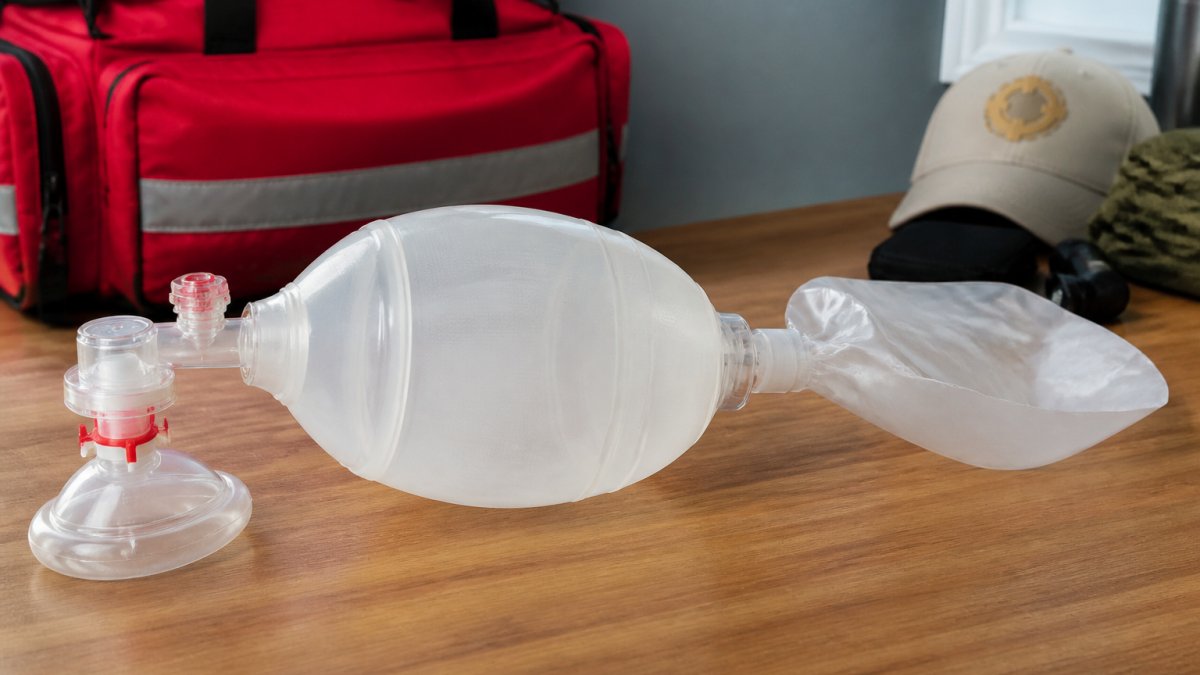
A disposable ambu bag is a single-use manual resuscitator that delivers positive-pressure ventilation to someone who has stopped breathing. We stock resuscitation gear for households, hikers, and remote-area responders, and we treat the bag valve mask as one of the few items you hope never to open.
Top search results are dominated by manufacturer pages and e-commerce catalogs listing SKUs, not neutral guidance on how to choose. We cover three leading disposable resuscitators, walk through correct use step by step, and flag the mistakes that ruin the seal, the valve, or the whole device.
Quick Comparison: Top Disposable Resuscitators
The three models below cover the realistic range for a prepared household or outdoor responder: a premium clinical standard, a size-specific workhorse, and a budget unit. All three are single-use, latex-free designs that prevent cross-contamination.
| Model | Sizes | Key Feature | Starting Price | Best For |
|---|---|---|---|---|
| Ambu SPUR II | Adult, pediatric, infant | SEBS bag material, single-shutter valve | $25.29 per unit | Best overall tactile feedback |
| The BAG II | Adult, child, infant | Integrated patient valve, oxygen-compatible | Contact for pricing | Standardized clinical use |
| MADA Manual Resuscitator | Adult | Lightweight (~1 lb), standard mask connector | $29.99 per unit | Simple kit stocking |
Pricing for these units varies and may require a direct inquiry or distributor quote. Price is the least interesting difference between them.
Ambu SPUR II Disposable Resuscitator Review
The Ambu SPUR II is a highly regarded disposable resuscitator for many buyers, earning that spot on its bag material rather than its spec sheet.
It comes in adult, pediatric, and infant sizes, and size matters more than brand.
The limitation is built in: it is designed for single-patient use only. You cannot clean and reuse it the way you would a durable resuscitator.

The BAG II Disposable Resuscitator Review
Laerdal's The BAG II suits buyers who want standardized, size-specific airway equipment and do not mind asking for a quote.
Where it falls short for a casual buyer: pricing requires a direct inquiry or distributor quote, normal for clinical-grade supply chains, but annoying if you are stocking a single go-bag.
Laerdal's strength lies in training consistency. If your household trains on the same equipment used in emergency medical services, your muscle memory transfers when it counts.
MADA Disposable Manual Resuscitator Review
The MADA disposable manual resuscitator is the straightforward option: a single adult unit, roughly one pound, with a standardized mask connector and an easy-grip surface.
Its appeal is simplicity and availability: it shows up through ordinary medical supply retailers, so replacement is easy if a bag gets contaminated or damaged. For a first aid kit you refresh annually, that predictability has real value.
The trade-off is material: the MADA bag lacks the flexibility of premium SEBS models, so recoil feels stiffer and refill takes more deliberate effort.
How to Use an Ambu Bag: Step-by-Step Guide
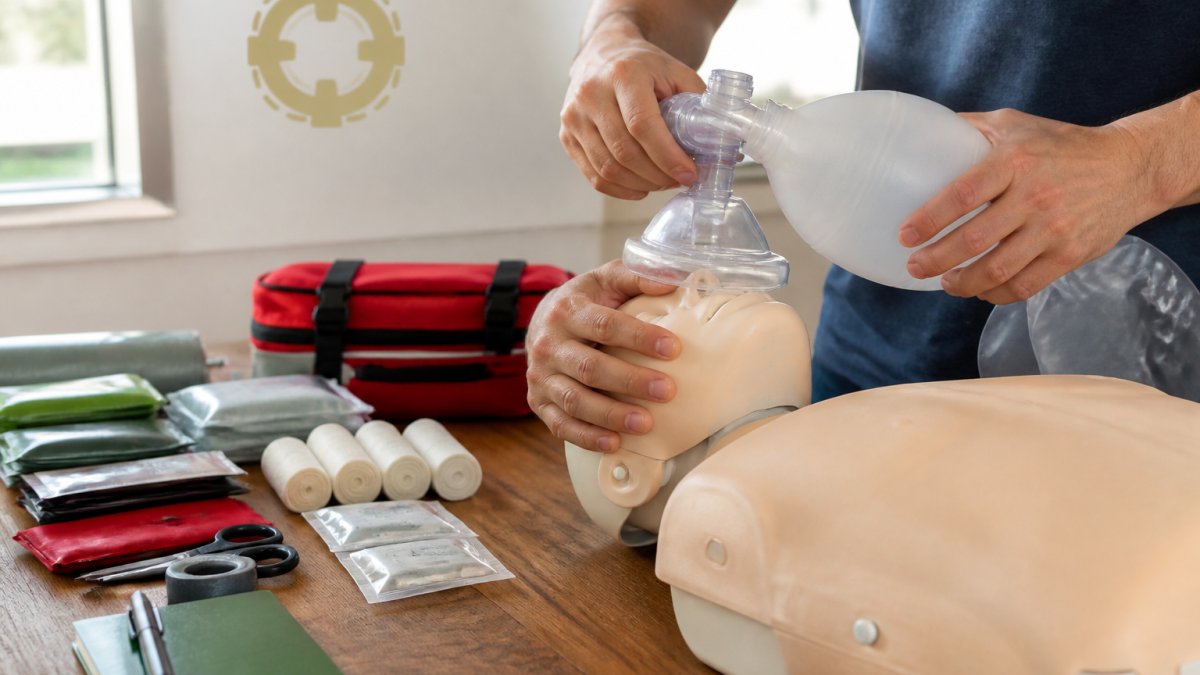
Using an ambu bag correctly comes down to three things: a tight mask seal, a controlled squeeze rate, and a clear airway. Get the seal wrong and nothing else matters.
Total Time: 2-3 minutes per ventilation cycle Difficulty: Requires hands-on training before you need it
What You'll Need
- A disposable bag valve mask in the correct patient size
- An appropriately sized mask
- An oxygen source and reservoir, if available
Step 1: Position the Patient [Time: 15 seconds]
Place the patient on a firm, flat surface and open the airway with a head-tilt, chin-lift. If you suspect spinal injury, use a jaw-thrust and keep the head neutral.
Expected Result: The airway is aligned and unobstructed.
Step 2: Seal the Mask [Time: 20 seconds]
Place the mask over the mouth and nose, form a C with your thumb and index finger around the mask rim, and hook the jaw with your remaining fingers to lift it into the mask.
Expected Result: No air escapes around the mask edge when you squeeze.
Step 3: Squeeze and Release [Time: 2 seconds per breath]
Squeeze the bag until you see the chest rise, then release and let the bag refill fully before the next breath.
Expected Result: Visible chest rise with each squeeze, and a bag that recoils to its original shape.
Disposable vs Reusable Resuscitators: Which Is Right for You?
Disposable resuscitators win for emergency kits and multi-patient settings because they eliminate cross-contamination risk. Reusable resuscitators win for training programs and clinical environments where equipment is cleaned, tested, and reused on a schedule. Most buyers get this wrong, because the two categories are not the same device in different packaging.
What Actually Differs
A single-use resuscitator is built to be opened, used, and discarded. It ships pre-assembled with valve, bag, and mask already mated, and is not designed to be disassembled for reprocessing. A reusable resuscitator assumes the opposite: bag, valve, and mask are separable, cleanable, and inspectable, with a manufacturer reprocessing protocol you are expected to follow.
That difference shows up in three places:
- Materials. Disposable bags commonly use SEBS (a PVC-free thermoplastic elastomer) or PVC. Reusable bags are usually heavier-gauge silicone or rubber, which tolerates repeated disinfection and autoclaving but feels stiffer in the hand.
- Valve design. Disposable units often use a single-shutter or integrated patient valve with fewer moving parts, because there is no need to open it for cleaning. Reusable units use valves that can be taken apart, which is both an advantage (serviceable) and a liability (more parts to lose or misassemble).
- Traceability. Reusable equipment in clinical settings is typically logged and tracked through a reprocessing cycle. Disposable equipment is tracked by lot number and discarded, which is why it is the default where patient-to-patient turnover is high.
The Decision Framework
Here is how to decide:
- Choose disposable if you are stocking a go-bag, a vehicle kit, or a household emergency supply. There is no cleaning protocol to remember and no risk of a contaminated bag sitting in storage.
- Choose reusable if you run repeated training cycles or work in a setting with an established sterilization workflow. The per-use cost drops over time, but only if the workflow is actually followed.
- Choose disposable for travel and remote use because it weighs little, packs flat, and needs no maintenance between trips.
The Hygiene Argument, Stated Precisely
The hygiene case is decisive. A reusable bag used on one patient and not properly reprocessed is a cross-contamination hazard for the next person who touches it.
The counterargument is cost and waste: reusable units cost more upfront but amortize across uses, but only if you actually perform the cleaning and inspection every time. If you cannot commit to that, the reusable bag is the more expensive choice in the only currency that matters.
Regulatory Context Buyers Should Know
Manual resuscitators are regulated medical devices. Single-use resuscitators are cleared or registered for one patient, and their labeling reflects that. Reusable resuscitators carry reprocessing instructions that are part of their cleared labeling.
For a household buyer, the takeaway is simpler: if the labeling says single-use, treat it as single-use. Do not extend the life of a disposable bag with disinfectant wipes, you cannot reliably clean the interior air path or verify the valve still seals correctly afterward.
Common Mistakes to Avoid with Disposable Ambu Bags
The most common mistake is buying a resuscitator and never training on it. A bag valve mask is not intuitive under pressure, and your first use should not be on a person who is not breathing. Beyond that, a second layer of problems only shows up once the bag is in your hands: valve issues, reservoir attachment problems, and seal failures that look like user error but are equipment or setup problems.
Setup and Sizing Mistakes
- Wrong size for the patient. Adult, pediatric, and infant bags are not interchangeable. Using the wrong one delivers the wrong tidal volume. A pediatric bag on an adult under-delivers; an adult bag on an infant risks over-inflation and gastric insufflation.
- Mismatched mask and bag. A bag with a mismatched mask will not seal, and an unsealed mask means air goes into the room instead of the lungs. Confirm the mask connector and size before you store the kit.
- Skipping the oxygen reservoir. If oxygen is available and you are not using a reservoir, you are delivering far less oxygen than you could. The reservoir is what allows the bag to refill with near-100% oxygen rather than room air.
Troubleshooting: Valve Problems
Symptom: the bag refills slowly or not at all. The usual cause is a stuck or partially obstructed valve.
Symptom: air escapes from the valve instead of the mask. This usually means the valve is not seated correctly or the bag was assembled incorrectly after opening.
Symptom: the patient valve does not close between breaths. This can allow exhaled air to be re-breathed.
Troubleshooting: Reservoir and Oxygen Attachment
Symptom: the reservoir bag will not stay inflated. Check that the reservoir is fully seated on the intake port and the tubing is not kinked.
Symptom: oxygen flows but the bag does not refill faster. Confirm the oxygen source is actually flowing and that the reservoir is connected to the correct port.
Symptom: the reservoir fills but the bag feels stiff. High oxygen flow into a small reservoir can over-pressurize the system.
Troubleshooting: Seal Failures
Symptom: you squeeze and see no chest rise. Before blaming the bag, re-check the seal.
Symptom: you hear air escaping around the mask. This is almost always a seal problem, not a bag problem. Reposition the mask, re-lift the jaw, and try again.
Symptom: the chest rises on one squeeze but not the next. The bag is likely not refilling fully between breaths.
Mistakes That Ruin the Device
- Reusing a single-use bag. Once opened and used, a disposable resuscitator is spent. Do not attempt to clean and reuse it.
- Squeezing too hard and too fast. Rapid, forceful squeezes inflate the stomach rather than the lungs. Squeeze only until the chest rises.
- Ignoring the labeling. The device labeling tells you the intended patient size, the single-use status, and the storage conditions. Read it before you store the kit, not during an emergency.
Frequently Asked Questions
Can you buy an Ambu bag for personal use?
Yes, disposable Ambu bags are available for purchase by individuals for emergency preparedness. Holy Prepper offers a selection of reliable resuscitators suitable for home first aid kits and go-bags. When buying, look for single-use models that come with masks in adult, pediatric, or infant sizes. Always check the expiration date and ensure the packaging is intact to guarantee sterility.
What is the primary purpose of a disposable Ambu bag?
A disposable Ambu bag, also known as a bag valve mask (BVM), is used to provide positive pressure ventilation to patients who are not breathing or are breathing inadequately. It delivers air or oxygen manually to support respiratory function during emergencies. The disposable design prevents cross-contamination between patients, making it ideal for pre-hospital care, first aid, and disaster response situations.
Do disposable resuscitators require an external oxygen source?
No, disposable resuscitators can operate without an external oxygen source by drawing in room air. However, they are compatible with supplemental oxygen for higher oxygen delivery. If oxygen is available, you can connect it to the reservoir bag to provide up to 100% oxygen. For basic first aid, room air is sufficient, but in clinical settings, oxygen is often added for better outcomes.
How should disposable resuscitators be stored in a first aid kit?
Store disposable resuscitators in a cool, dry place away from direct sunlight and extreme temperatures. Keep them in their original packaging until use to maintain sterility. Check expiration dates regularly and replace expired units. In a first aid kit, place the resuscitator where it is easily accessible and protected from punctures or crushing. Consider a dedicated pouch for airway management supplies.
What are the key differences between adult and pediatric BVMs?
Adult and pediatric BVMs differ primarily in size and tidal volume. Adult bags typically deliver 600-800 mL, while pediatric bags deliver 250-400 mL, and infant bags 100-150 mL. The mask size also varies to fit different facial structures. Using the correct size is critical to avoid over-ventilation or inadequate ventilation. Always match the BVM to the patient's size and weight for safe and effective ventilation.
Building a kit that actually works when the power is out and the roads are closed is harder than buying gear. The difference is whether the equipment is sized, stored, and practiced with before the moment arrives. Holy Prepper carries resuscitation supplies, first aid essentials, and pet emergency gear in one place, with a fast checkout and a curated selection so you are not guessing at quality. Browse our emergency medical supplies and build a kit you have actually trained on.